7 best online yoga classes & streaming subscriptions


Imagine this: it’s early morning, and as the first rays of sun spill into my room, I unroll my yoga mat, ready to welcome the day with a stretch and a deep inhale. Yet, amidst the solitude, I yearn for a yoga class’s communal spirit and expert guidance. Have you ever felt this longing to connect and grow in your practice yet find yourself navigating the constraints of your personal space?
Fear not, for I’ve scoured the digital realm to present you with a select compilation of the best online yoga classes. These platforms are a treasure trove, offering the perfect blend of flexibility, diversity, and the essence of connection we seek.
Whether it’s a subscription service you’re after or streaming content to suit your schedule and mood, your search ends here. Ready to uncover your ideal virtual yoga space? Let’s embark on this journey together, discovering a world where the perfect yoga practice is merely a click away.
Looking for the best online yoga classes? Watch your favorite ones at home with one of these best yoga streams
In any case, you can stream the best online yoga courses to support you with your yoga at-home practice!
Nowadays, place, time, or convenience are not required to practice with experienced and knowledgeable teachers and take well-taught online yoga streaming classes.
So, how do you practice yoga at home?
There are many quality Online yoga classes streaming platforms and yoga programs for yoga students to choose from, varying in quality, length, various video channels, yoga subscription models, etc.
We have selected the best streaming yoga classes for you to pick the one that best suits you.
Here’s what we found as far as your next virtual yoga class.
Best Online Yoga Classes & Virtual Streaming Subscription Platforms
1. Omstars
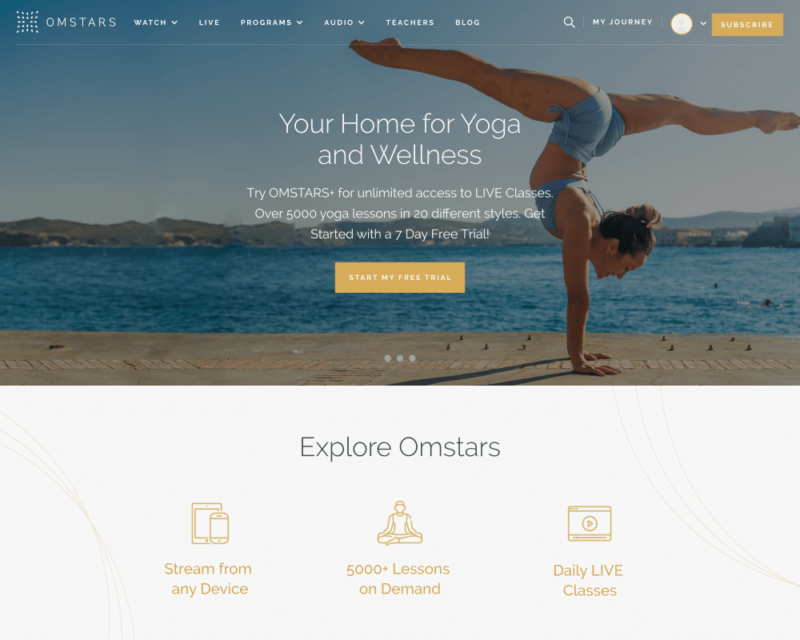
Omstars presents authentic, captivating, insightful, and revitalizing content meticulously designed by passionate yogis for global yoga aficionados.
Often dubbed the “Streaming Service for Yogis,” Omstars reaches out to a vast spectrum of practitioners.
Whether you’re embarking on your yoga journey, aiming to alleviate chronic discomfort, desiring tranquility through mindfulness, or aspiring to achieve a flawless handstand, Omstars is your reliable guide.
Rekindle a sense of the divine and infuse reverence into your everyday existence.
Yoga, a deep-rooted spiritual practice, comes alive on Omstars, handpicked and showcased by the globe’s most revered instructors. Each session is a chapter of an all-encompassing course thoughtfully crafted by elite figures in spirituality and mindfulness.
Omstars extends:
- A rich On-Demand archive featuring 5000+ yoga sessions across more than 20 distinct styles.
- Interactive daily LIVE sessions.
- Meditative guides, enlightening podcasts, and discourses.
- Special discounts on select programs (applicable to specific plans).
- Uninterrupted streaming on all devices.
- A privileged gateway to a members-only circle.
- Embark with a 7-Day Complimentary Trial (available on particular plans).
- The liberty to discontinue your membership at your discretion.
Membership Insights:
- Complimentary Membership: A 7-Day Trial at no cost.
- Monthly Commitment: Opt between US$18/month or US$24/month.
- Yearly Commitment: $148.50 annually.
Web: omstars.com
2. poweryoga.com
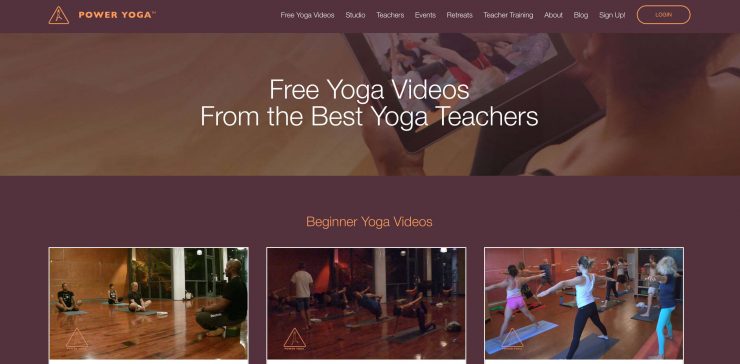
Bryan Kest is the primary teacher, and owner at Poweryoga.
From our perspective, Bryan remains one of the best teachers we have encountered. His comprehensive site offers online yoga classes, class schedules, instructor bios, and more…
When looking for personal, consistent home yoga practices, this is a great choice. Bryan Kest has carefully selected his teachers for their multi-dynamic experience, their well-balanced sequences with all elements of physical exercise, mindfulness, moderation, and meditation.
Poweryoga also offers a variety of free yoga classes online for all levels.
We love their donation concept, where a portion of the proceeds from Poweryoga is given to three different charities.
So by subscribing, not only you keep yourself healthy, but you also help give something back to the world!
Pricing:
- Free Membership (18 free classes)
- Monthly fee: $22/month.
- Annual fee: $180/yearly.
Pros
- 24/7 access
- Pre-recorded videos with a library of over 1,000 videos.
- Hand-picked yoga instructors with a diverse offering including, but not limited to, Prenatal, Yoga Nidra, Tai Chi, Restorative and Power Yoga Flow.
- Subscription including monthly and annual options at an inexpensive price.
- Access to a FB community for active members only and new free classes each month.
Cons
- Technology is necessary; one must have access to a computer or phone.
- Lack of interaction with the instructor and personalized feedback for variations.
IG: @bryankestpoweryoga
Web: poweryoga.com
Also Read>>> Yoga Alliance Certification Online
3. Bodhilive.Com
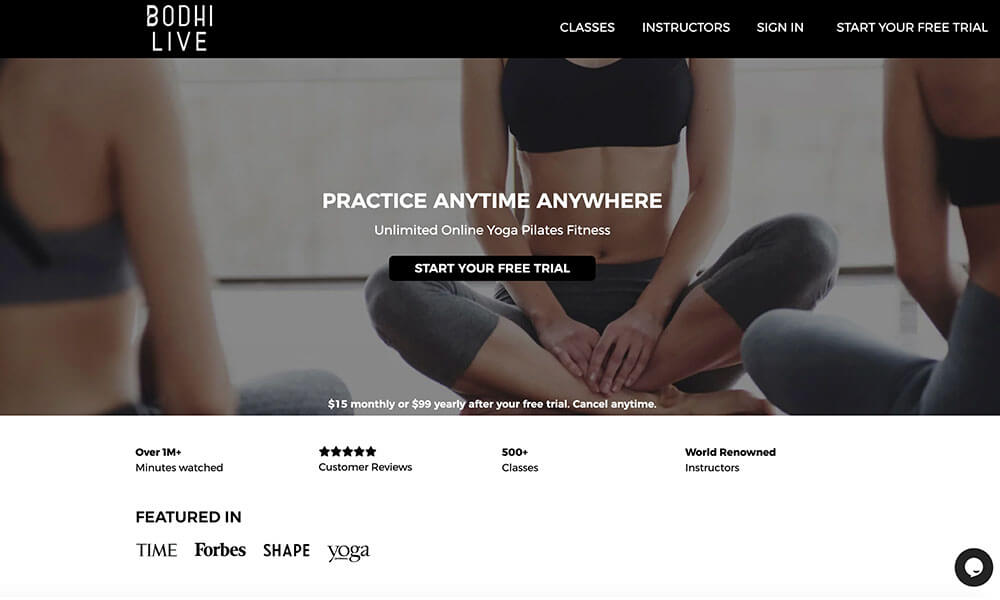
Bodhilive.com is a comprehensive online platform that offers a wide variety of yoga, pilates, fitness, and meditation classes for all levels of practitioners.
Whether you are a seasoned yogi or new to the practice, you will find a class that fits your needs on this platform.
The high-quality 4k video, excellent audio, and skilled instructors make it a great choice for at-home workouts. With a free 7-day trial and affordable monthly or annual fee options, you can invest in your health and practice anytime, anywhere, with Bodhilive.com.
Follow them on Instagram @bodhi_live or visit their website Bodhilive.com to start your journey towards wellness today.
Invest in your health and practice anywhere anytime with Bodhilive.com
Pricing:
- Free Membership (7 Day Free Trial)
- Monthly fee: $15/month.
- Annual fee: $99/yearly.
Pros
- Hundreds of top-notch yoga, meditation, pilates, and fitness videos available.
- Expert instructors guiding you throughout.
- Stream anytime, anywhere on your iPhone, PC, or smart gadget.
- High quality audio, visuals, and studio setup.
- Affordably priced at $15 monthly or $99 annually.
- Courses for all levels, from novice to expert.
Cons
- Lacks the community feel of a live group session.
- No real-time teacher oversight as sessions are pre-recorded.
- Only auditory cues and visual aids, no physical assistance.
- Potential technical issues with online content.
IG: @bodhi_live
Web: Bodhilive.com
4. youaligned – Online Yoga Classes
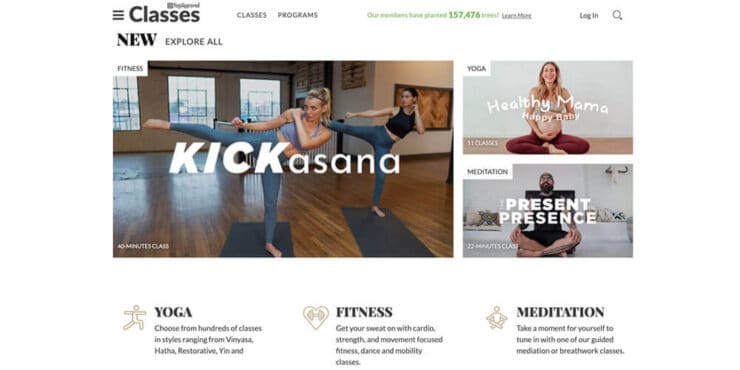
Youaligned arranges its sessions in terms of duration, difficulty, instructor or category.
As well as traditional yoga lineages like Ashtanga and Vinyasa, this platform has training for fitness and many kinds of yoga styles to learn. Also, there are free classes for all levels of difficulty.
One of the most interesting things about YA is that they have a sustainable initiative in which they plant a food-producing tree for every class you take.
At the moment that this is being written, around 55,800 trees have already been planted.
Finally, they also offer many interesting articles for their yogi community and the option to join their newsletter.
Pricing:
- Trial: 14 Days Free.
- Monthly fee: $14/month.
- Annual fee: $120/yearly ($10/month).
Pros
- Accessible offline, making it ideal for journeys or areas without internet.
- A vast library of over 700 top-notch classes and programs at your fingertips.
- Compatible with all leading platforms like Apple, Android, Amazon, and more.
- Every completed class contributes to planting a tree that yields food.
- A diverse range of instructors offering yoga, meditation, Breathwork, fitness, and beyond!
Cons
- Limited offerings for advanced fitness enthusiasts.
- Features only a handful of renowned instructors.
- No alternatives might be more budget-friendly.
IG: @you.aligned
Trees Planted: Trees Planted: 250,000k and counting!?
WEB: youaligned/classes
5. yogadownload.com – Online Yoga Classes
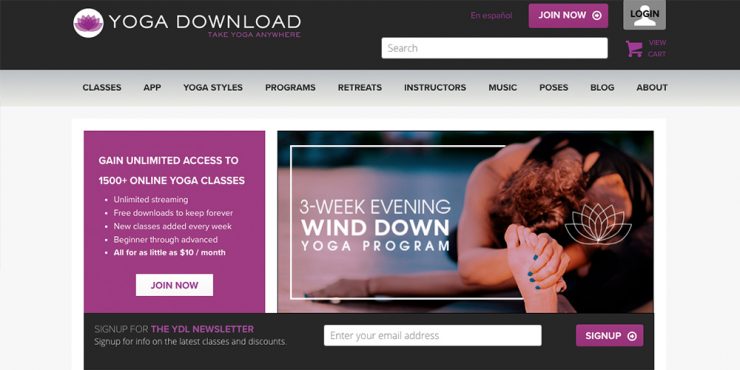
Firstly, Yoga Download is a platform that understands the importance of affordability and flexibility. For instance, they offer not only a reasonable monthly fee, as well as free 20-minute videos. Secondly, Yoga Download sstates that members have access to over 1500 classes for download.
So for example, $12/month will give you access to all videos, with the ability to download two of them, while $18/month will give members unlimited access to download.
Yoga Download has a community of over 250,000 followers, so if this website fits your lifestyle, become a part of the team!
Pricing:
- Trial: Free classes available.
- Standard Monthly Fee: $12/month w/ 2 monthly downloads included.
- Unlimited Monthly Fee: $18/month w/ unlimited downloads.
- Unlimited 3 or 6 months Fee: $40 or $70 yearly.
- Annual Fee: $120 yearly ($10/month).
IG: @YogaDownload
Web: yogadownload
6. alomoves
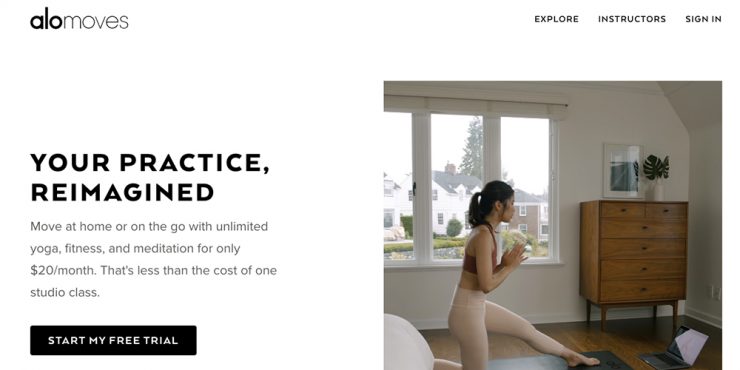
Above all, what makes AloMoves different than other platforms out there is the capacity to choose tailored content to create your perfect practice.
For instance, they allow you to sort videos and classes by duration, style, difficulty (beginner, moderate, intermediate, advanced), intensity (1-4), and also categories such as Yoga, Fitness, Mindfulness, or Skills (arm balance, mobility, etc.).
After the two weeks trial, there are monthly and annual subscription options available.
Their home page allows access to their content all at once with only one tab titled “Explore,” and you can also download videos offline for your best online yoga moments.
Pricing:
- Trial: 14-Day Free Trial.
- Monthly Fee: $20/month
- Annual Fee: $199/yearly (~$16/month)
IG: @AloMoves
Website: alomoves
7. Yoga Streaming Classes with myyogaworks
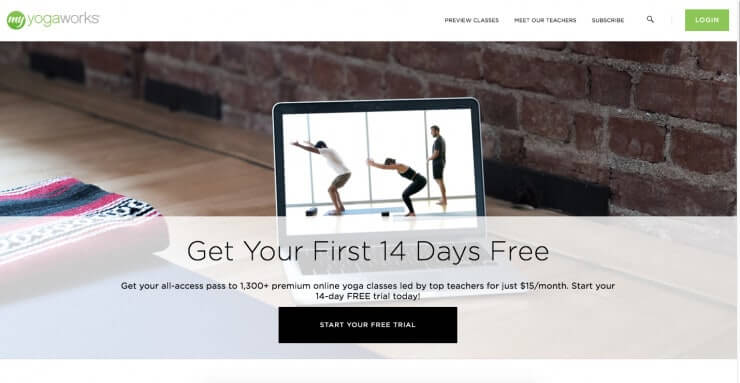
YogaWorks features 1,000+ premium yoga classes and is continuously growing its platform. For instance, you can search for yoga streaming classes by teacher, duration, and style to find what you need. Similarly, classes come in all shapes and varieties, from traditional Hatha & Vinyasa yoga to classes that target specific regions.
Moreover, you can take an hour class or a 3-minute class to tailor your yoga to your schedule. The site boasts tons of free content for you to get the YogaWorks experience for free. What’s even better is their free 14-day unlimited access to their classes. You’re sure to start your daily practice, wherever you see fit.
Pricing:
- Trial: 14-Day Free Trial
- Monthly Fee: $15/ month for unlimited access
IG: @YogaWorks
Also Read >>> hatha yoga
Also Read>>> How Much Do Yoga teachers Make?
8. grokker.com – Yoga Class Online
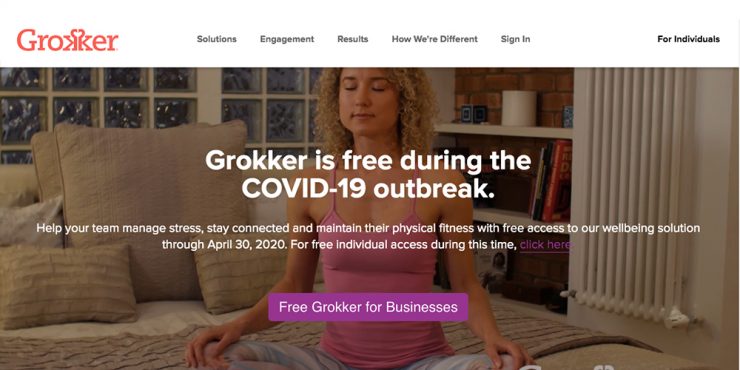
Are you looking for yoga classes near me online and a platform with experts to personally answer your questions and provide you with the information you need for your practice? Certainly, if you are a person who desires 1:1 communication and advice, Grokker is the best choice.
With a rich website with a variety of content, Grokker users can not only access yoga videos but many other workouts and articles related to health. For example, HIIT workout sessions, plant-based diets, and delicious vegan recipes.
Above all, Grokker is free during the COVID-19 outbreak until further notice! The registration process is simple and it can be cancelled at any moment..
It also provides business plans formats for firms.
Pricing:
- Free during COVID-19. Usually, 14-Day Free Trial.
- Monthly Fee: $14.99/month unlimited.
IG: @GrokkerInc
Web: Grokker
9. gaia.com – Yoga Class Online
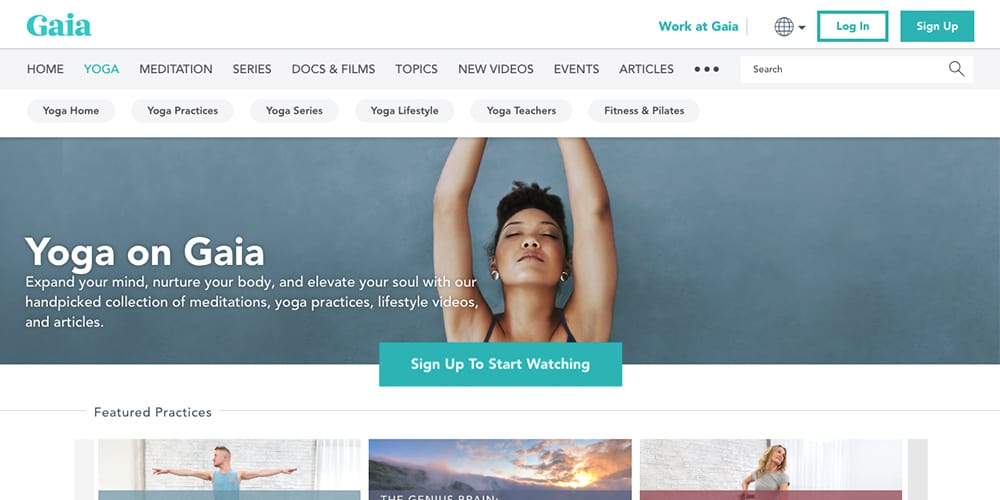
A platform devoted to “empowering the evolution of consciousness,” Gaia offers over 8,000 films, shows, and classes related to yoga, transformation, and seeking the truth.
Also, the platform makes accessing this content easy with availability on the new Apple TV, Roku, IOS, Chromecast, and on the web.
By proposing a few different plans of monthly and annual – the last also offering an option with access to Live workshops and Q&A – you can choose the best option that fits your lifestyle.
Similarly, choose yoga videos based on style, teacher, level, duration, and focus. To sum up, if you want to stream videos that explore and connect with your soul and higher levels of consciousness, Gaia is for you!
Pricing:
Choose your best online yoga!
- Trial: 7-Day Free Trial
- Monthly Fee: $11.99/month or $8.25 if billed annually (with bonuses). Special 3 Months for 29 US$.
- Live Access Annual Fee: $299/yearly ($24.92/month).
IG: @WeAreGaia
Web: Gaia
Also read >>> Yoga Origins
10. practyce
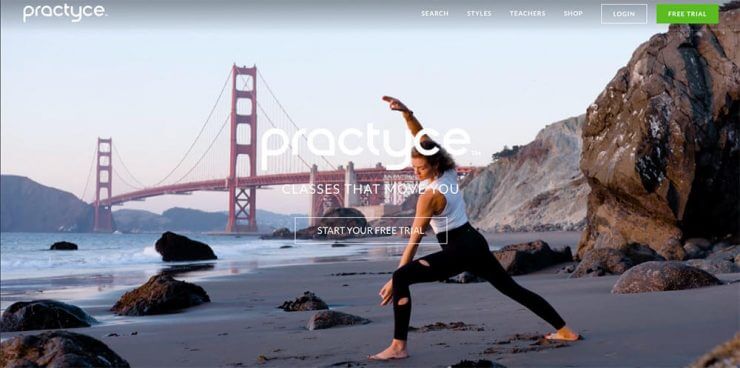
modern video library & hard-to-find classes
Practyce is one of the newest yoga streaming platforms sister company to the online yoga retailer YogaOutlet.
They offer a two-week free trial plus a monthly price of $9.99, which gives you access to its entire video library. To help you incorporate your practice into everyday life, Practyce has video recommendations and accessible search capacities to give you a more curated experience.
We like Practyce because they focused on hard-to-find online classes such as Kundalini, Acro, Aerial Yoga, and, coming soon, Bhakti. Regularly, Pracyce team adds new classes and new videos. An additional perk is that Practyce members get a 10% discount on all YogaOutlet purchases as part of their monthly subscription.
Pricing:
- Trial: 14-Day Free Trial
- Monthly fee: $9.99/month.
IG: @Practyce
practyce.com
Also Read>>> How to Become a Yoga Instructor
11. ekhartyoga.com – Yoga Online Classes
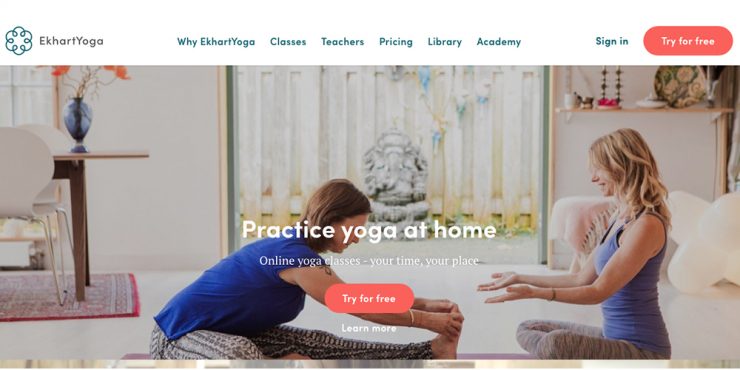
EkhartYoga was born from Esther Ekhart’s dream to share the love of yoga. Today, thousands of people across the world practice yoga online on this platform.
With over 3,500 classes in different styles guided by over 40 world-class teachers, they are one of Europe’s biggest online studios.
More importantly, creating positive change & transformation through yoga always remains at the core of everything that they do.
When you join EkhartYoga, you will get access to a wide range of virtual yoga classes and experiences, from dynamic Vinyasa yoga to deep relaxing meditation. 70 guided programs keep you motivated and encouraged to develop your practice.
From Yoga for Beginners Course, Balanced Body & Mind, Mastering Anxiety, 30 Mornings of Yoga to Complete Yoga Program, and many more, there is a choice of virtual yoga class for everyone, regardless of your level.
You receive direct guidance from highly experienced teachers who love to connect with you online and in person.
We particularly love their vast library, where you can dive into many useful articles and resources to support your yoga and meditation practice.
With tips, yoga poses explained, guides to different yoga styles, and a helpful dictionary of yoga terms.
Pricing:
- Trial: 14-day free trial (you can cancel anytime)
- Monthly Fee: € 16/ month
- Annual Fee – € 160/ year +1 month gift voucher for a friend +Discounts on yoga wear and accessories.
IG: @ekhartyoga
Web: ekhartyoga.com
12. yogainternational.com – Online Yoga
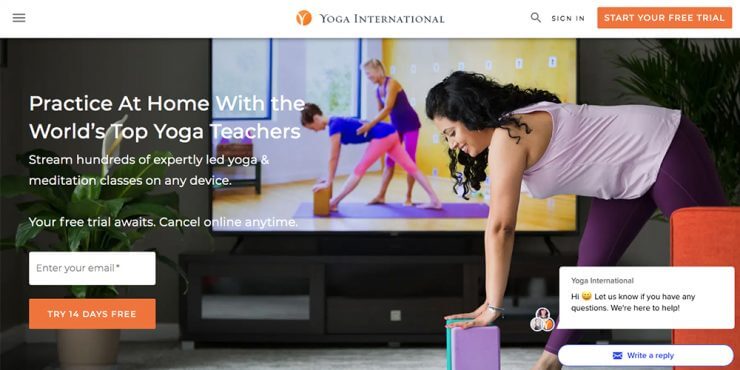
This well-developed and the interactive platform offers so many options for yogis at any level. Firstly, Yoga International allows users to practice at the time of the live class streaming or on their own, by downloading an already made video. Secondly, the website has an extensive list of qualified teachers and many styles of yoga, including kundalini, yin, and yoga therapy.
What makes Yoga International stand out?
Perhaps their challenge programs and their digital courses and online yoga classes, which are videos provided on topics, including anatomy, self-massage, and chakras, to help their users pursue their interests with motivation and support!
Pricing:
- Trial: Limited time special offer of 30-Day Free Trial. Usually, 14-Day Free Trial.
- Monthly Fee: $19.99/month.
- Annual Fee: $119.88/yearly ($9.99/month).
IG: @yoga_international
Web: YogaInternational
13. yogateket.com Virtual Yoga Streaming Yoga from Sweden
Yogateket is a Sweden brand, and the name comes from the junction of Swedish words “apoteket” (pharmacy) with “biblioteket” (library). It makes Yogateket a library full of remedy for healthy living – where they see Yoga as the remedy – accessible from anywhere.
Yogateket offers tailored options where you can plan your class according to a body part, what you want to focus on, which level suits you, style, teacher, and duration.
They also offer challenges, such as 21-Meditation, programs from a variety of styles such as “From Flexibility to Mobility” and “Prenatal Yoga. “
Their most differentiated feature is the Collections, which consist of a set of classes around a specific topic, such as “Yoga for Surfers” or “Monday Workouts. “On Yogateket website, there is something for every mood and need for the moment!
Pricing:
- Trial: 14-Day Free Trial
- Monthly fee: $18/month.
- 6-months fee: $99/once ($16,5/month).
- Annual fee: $180/yearly ($15/month).
IG: @Yogateket_
Also Read>>> Practice Yoga at Home
14. yogisanonymous – Virtual Yoga anytime!
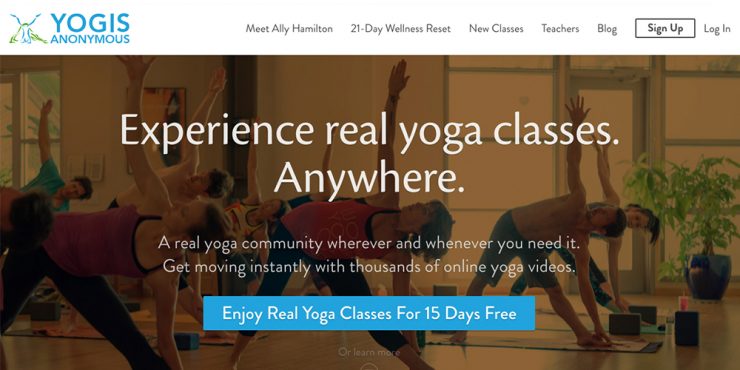
Yogis Anonymous is a real yoga studio based in Santa Monica, California, that regularly films their virtual yoga classes and then streams them online.
The good news is that you don’t need to be anywhere near California to access these videos or be a part of the community! In other words, get to know the teachers and regular yogis attending the class while you are at home anywhere in the world.
Yogis Anonymous gives the user a creative way to choose various types of online yoga classes asking them to fill in the blank on one of these few questions: “I’m feeling…,” “I want to…,” or “I need relief from…”.
As a result, if you answer, “I’m feeling anxious,” calming yoga videos with titles such as “Super Chill” will come up for your easy access, hence being part of this article on the best online yoga platforms.
Pricing:
- Trial: 15-Day Free Trial.
- Monthly Fee: $15/month.
IG: @YogisAnonymous
15. monyogavirtuel.com Yoga Streaming services in French
Please note this website is in French only. So, are you a visual learner who makes decisions best with the help of colors and user-friendly websites?
Not only can you choose from a wide selection of yoga styles, there are descriptions of particular lineage to help you make your decision.
Secondly, the network allows the user to select videos by many categories: styles, themes, studios, teachers, levels, and length.
Perhaps the most outstanding characteristic of this platform is the option to navigate and practice yoga using the French language.
If you are a native speaker of French and want to engage yourself in creative ways, Mon Yoga Virtuel is interesting to check out!
Pricing:
- Trial: 7-Day Free Trial.
- Monthly Fee: $19/month
- Annual Fee: $199/yearly (~$16,50/month)
IG: @Mon_Yoga_Virtuel
16. yoga anytime – one of the best online yoga sites
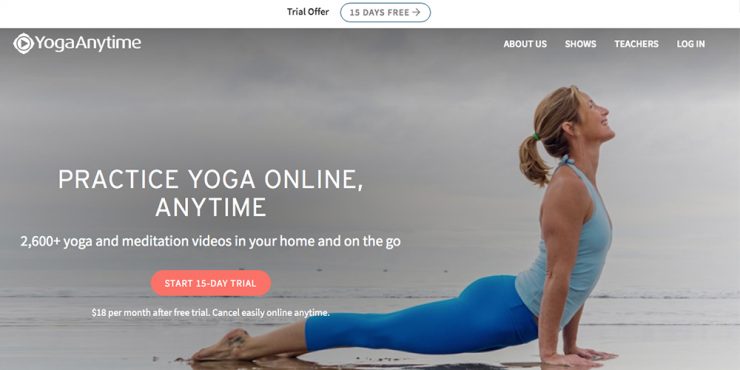
Yoga Anytime is unique in its approach to cultivating a relationship between the yogi and their teacher, practice, or topic. Also, not only does this platform have online yoga classes videos to stream, but it also created the Yoga Show.
There are over 70 themed Yoga Shows tailored to your needs including subjects like “Yoga for Anxiety: help ease anxiety with simple movements, restorative yoga, meditation, and breathing practices” or “Good Morning Yoga: Vinyasa sequences designed to awaken the body, inspire the heart and prepare the mind for the day.”
With unlimited access to 2,600+ yoga and meditation videos, Yoga Anytime is comprised of various opportunities for at-home yogis looking to satisfy a range of needs.
Pricing:
- Trial: 15-Day Free Trial.
- Monthly Fee: $18/month.
IG: @YogaAnytime
17. yogajournal – best online yoga from the famous yoga magazine
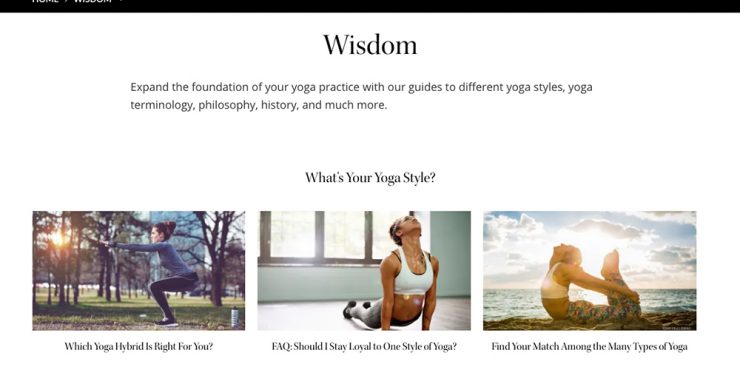
Yoga Journal is a great site to visit if you want to get many uses out of one platform. They are a media company with information on poses, meditation, life, people, blogs, yoga studios, events, teachers, AND online yoga classes videos! You can choose the best video for you through categories of how-to, level, culture, or lifestyle.
Trying a new pose, but unsure of how to go about it safely? Make sure to check out the ‘how-to’ yoga videos for great tips and advice. Subscribe for ad-free Premium experience, or go online to get information and videos for free.
Pricing:
- Trial: 30-Day Free Trial and free yoga videos.
- Monthly Fee: $3,99/month.
- Annual Fee: $39/yearly ($3,25/month)
IG: @YogaJournal
18. doyogawithme
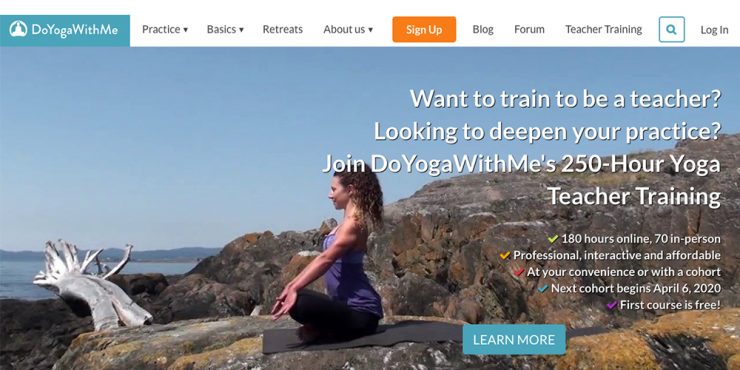
Do Yoga With Me is an online yoga video website for yogis of all needs and levels (beginner, intermediate and advanced). The best part? It’s FREE. This website offers hundreds of free yoga videos, relying on subscriptions and donations to keep the platform running. Do Yoga With Me offers ad-free, new videos, exclusive programs, and challenges to monthly and yearly subscribers.
This platform is perfect for someone who finds they don’t have the funds to pay for classes at the studios or to subscribe to access such content. College students who want to begin or continue their yoga practice without the bonds of fees might consider this platform.
Pricing:
- Trial: Free unlimited.
- Monthly Fee: FREE or subscribe $5/month for bonus videos.
- Annual Fee: $55/yearly for bonus videos.
IG: @DoYogaWithMe
Also Read >>> 10 Things to Consider when choosing an Instructor Course
19. glo
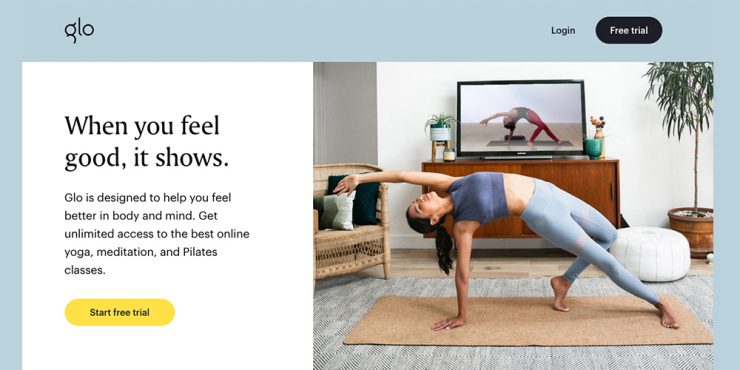
If you are concerned about not having a personal element to practicing at home, this website is for you. That is to say, the Glo team prides itself on having world-class, experienced teachers to guide you through your practice. For instance, you can search through their profiles and find a teacher whose practice style matches your needs.
Also, make yourself more comfortable in your practice by becoming familiar with the setting of Glo’s real yoga studio located in Santa Monica, CA. Online Yoga classes are taught and filmed there at the same time! In short, if you want the feeling of being in a group setting from your own home, Glo is an incredible site to explore.
Pricing:
- Trial: 15-Day Free Trial.
- Monthly Fee: $18/month unlimited.
IG: @YogaGl
20. reflexionyoga
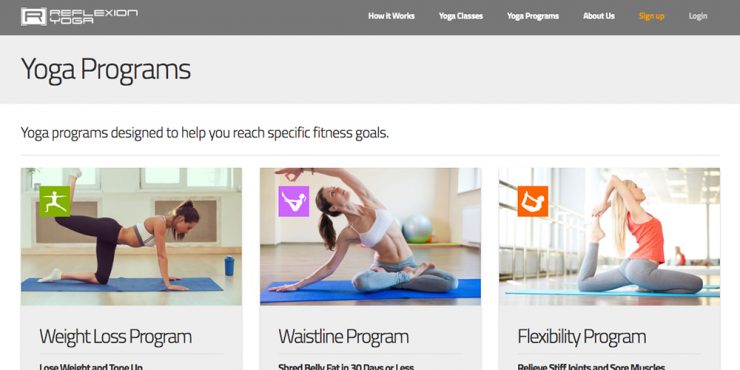
This is your chance to start practicing yoga! Reflexion Yoga offers you the foundation and a gentle start to learn and begin your practice. Entirely focused on yoga for beginners, the digital portal is designed for different devices and profiles.
Also, they offer power yoga, yoga with weights, and workshops for prenatal, chakra, hand-stand, and much more. Amongst their programs, you can choose to focus on flexibility, weight loss, or waistline, plus several yoga classes that will help you reach fitness and begin your yoga journey. Anywhere, anytime.
Pricing:
- Trial: Not available.
- Monthly fee: $9/month.
- Annual fee: $89/yearly ($7,50/month).
IG: @Reflexion.Yoga
Read more >>> Healy Energy Frequency Device Review
21. Streaming Yoga with zenward
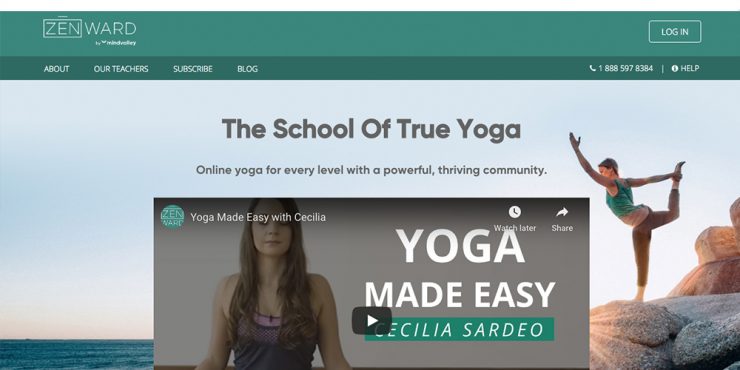
The School of True Yoga focuses on community support and yoga classes for all levels. With an educational approach, their community of yogis offers not only yoga classes but also work in empowering their students to live a healthier life.
Formed by 200 educators from 40 different nationalities, participants have the opportunity to join discussions and forums and even upload their yoga videos! Yoga classes vary from 10 to 60-min to fit your schedule better.
Pricing:
- Trial: Not available.
- Monthly fee: $14/month.
- Annual fee: $120/yearly ($10/month).
22. yoga today – Online Yoga Classes
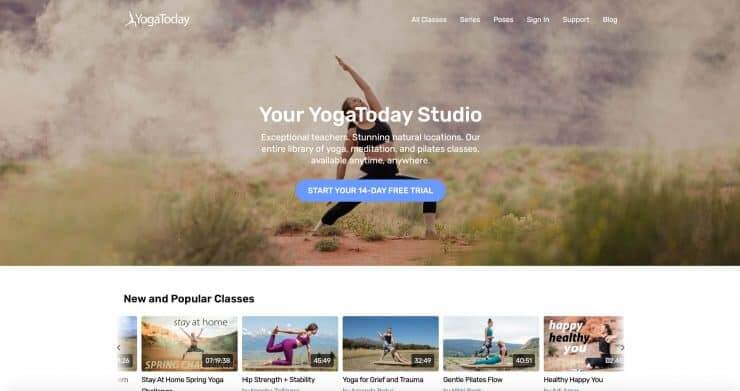
Yoga today streaming yoga classes are divided into what they call “series”, which are a collection of carefully chosen and thoughtfully organized classes that address a unique focus within the realm of yoga, meditation, and pilates. They range from classic yoga styles such as Ashtanga and Hatha Blend to more differentiated ones such as Self-Massage, Kundalini, Chair Yoga, and Yoga Sculpt.
Their classes can also be divided into mood or intent, such as “For the Family“, “Energizing“, “Calm the Mind“, “Back relief“, and many more. They are one of the only platforms that present yoga for men, focused on injury prevention, introduction to meditation, and vinyasa for athletes – which, of course, can also be taken by women.
Last but not least, one of their exclusive offers are bite-size classes on specific asanas (poses), which allow the energy to flow better within the body, enhancing the practice with more fluidity whilst building proper alignment.
Pricing:
- Trial: 14-Day Free Trial.
- Monthly fee: $15/month.
- Annual fee: $119/yearly ($9,90/month).
IG: @YogaToday
Also read >>> ashtanga yoga
23. Best Streaming Yoga with yogavibes
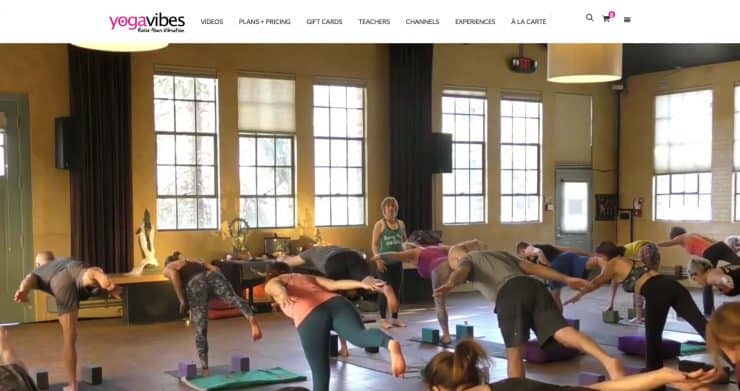
In this platform, you are able to tailor your practice according to styles, levels and class times. Yoga Vibes offers over 5,000 yoga and fitness videos and new yoga classes are added weekly.
Their difference is the availability of the alternative techniques such as Inversions, Anusara, Detoxification, Myofascial Release, ParaYoga®, Athletic Conditioning, and many more. The subscription plan gives unlimited access to their video library and the annual plan comes with a Free Jade Yoga Mat.
Pricing:
- Trial: 15-Day Free Trial.
- Monthly fee: $19,95/month.
- Annual fee: $199/yearly ($17/month).
IG: @YogaVibes
24. Best Yoga Class Online with yogagreenbook.com
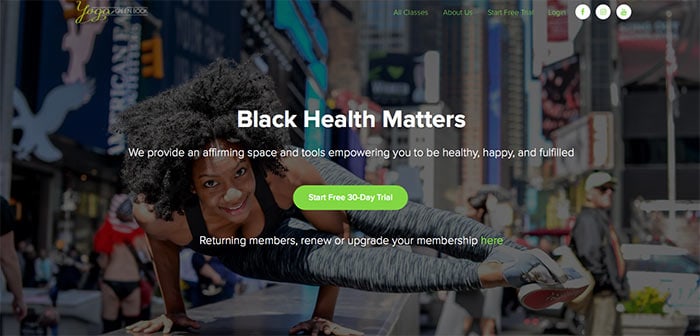
Yoga Green Book was launched by Carla Christine, who saw the positive impact yoga had on her own wellbeing and wanted to expand its impact on her entire community. She says that though yoga had been profoundly helpful in her own life, she knows how challenging it is for yoga pupils to locate and interact with asserting yoga instructors.” So she made an entire online community to connect people with yoga teachers from their cultural backgrounds.
The 30-day free trial includes unlimited streaming yoga and meditation classes, optional one-on-one video consultations, and other types of content to uplift and support mental and physical health.
Pricing:
- Trial: Free 30-Day Trial
- Monthly Membership: $19/month
- Annual Membership: $199/annually
IG: @yogagreenbook
25. Best Yoga Online with r20.com/yogatoday
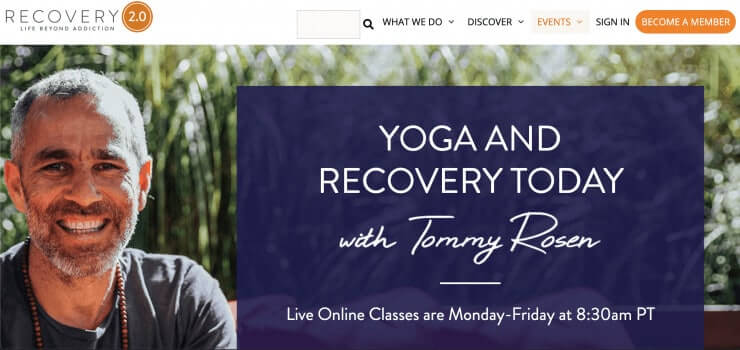
In this platform, you can watch LIVE Online Classes every weekday at 8:30 PT hosted by Tommy Rosen. The classes are donation-based and open to all.
Tommy is teaching powerful yoga techniques to detox, tone and strengthen the lungs coupled with movements to build immunity and meditation to calm the mind. He will move the energy through the body, calm the mind and help us connect with our spiritual center.
Pricing:
- Cost: donation-based, with a suggested donation of $10.
FB: @Recovery2point0
Best Online Yoga Apps
1. Elementa

This interactive app encourages its viewers to be a part of choosing their journey. You can select classes based on your skills level, video length, category (Mind, Body, and Self) and – here’s where it gets interesting – Elements (Air, Earth, Fire, Water, and Ether).
So, for example, if you need help with Grounding and Centering yourself, you’d choose Earth Element. For activating and igniting your inner energy, then you’d go with Fire. Use the platform to help curate your experience. Lastly, choose a presenter and your episode. See Be Now – the creator of Elementa – is a platform with a small team that strives to have its viewers experiencing more connection.
Trial: 7-Day Free Trial.
Monthly Fee: $10/month.
Annual Fee: $50/yearly ($4/month).
IG: @Creatore.io
2. Down Dog App
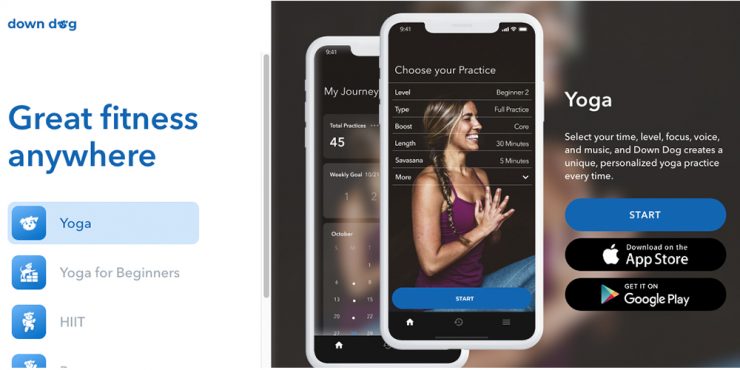
Down Dog is an app that features around 10 different types of Yoga, such as Vinyasa, Restorative, Yin, and Ashtanga. It allows you to choose classes according to sequence type, level, and length. Also, the user can select a Boost in a specific area (Glute Strength, Standing Balances, Hamstring Stretches).
Although free to download and use, this platform also offers a paid pro-membership for access to more options such as changing the music style, voice, or pace of your practice. Easy to access on multiple devices, if you want an app with fantastic accessibility and the choice to save practices, check out Down Dog.
Yoga for Beginners – Down Dog App
Trial: Free
For students, teachers (K-12 and college) and healthcare professionals, free access until July 21st.
Monthly Fee: ~$7.99/month
Annual Fee: ~$49.99/yearly ($~4/month)
IG: @DownDogApp
You May Also Like>>> YOGI TIMES University Online courses
Best Free Online Yoga Classes on Youtube
Sifting through thousands of yoga videos can feel overwhelming, and the last thing you want to feel is frustration during your precious Zen time. The yoga channels below are my personal favorites and won’t disappoint you. There are various types of yoga practice depending on various styles, approaches, and purposes. You can find them on various websites and YouTube Channels.
1. Best Online Yoga Classes with The Playful Modern Yogi: Adriene

YouTube Channel: Yoga with Adriene
Website: Yogawithadriene.com
Adriene Mishler is the yoga teacher you want to be best friends with, whose online yoga classes videos include the occasional slip of an F-bomb, admittances of drinking too much coffee, and her genuine, down-to-earth good vibes.
Adriene is an Austin-based actress and yogi who has 550+ videos under her belt and an impressive following base of more than 6 million subscribers. Part of the popularity behind her channel is the personality she brings to her yoga classes; she indeed imbues each video with a gentle playfulness and her quirky humor.
Do yourself a favor and allow Adriene to help you with everything from cramps, indigestion, bad moods, and backaches—she even has a “Yoga for Hangovers” sequence.
Also Read >>> Vinyasa Yoga
Her Foundations of Yoga series, 41 in total, are short instructional videos that break down each pose to familiarize beginners with the basics; these videos are the perfect foundation for a life-long yoga practice.
Her yoga lessons, which are typically in the half-hour range, are an amazing pick-me-up and excellent for when you’re craving a light-hearted practice that will leave you smiling and refreshed.
2. The Zen Yogi Master: Nora – Best Online Yoga
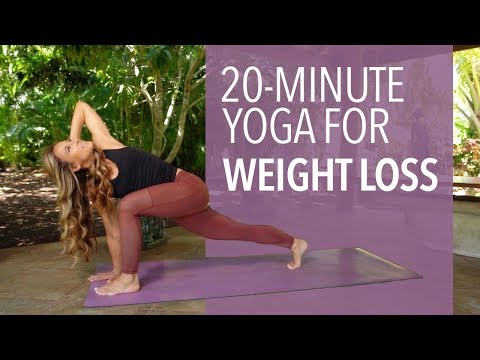
YouTube Channel: Yoga with Nora
Website: Yoginora.com
Yogi Nora is a rare bird who doesn’t just teach yoga; she truly lives yoga and embodies it. She possesses this ethereal and glittering tranquility about her, comes from her deeply dedicated yoga practice (six hours every day!). Her skill level, grace, and mysterious twinkling laugh leave you wondering, “Who is Yogi Nora, and where does she come from?!”.
She is ecstatic in the most serene way possible, with a glow and joy that shines through each of her videos. Although most of us aren’t striving for Yogi Nora’s level of dedication, she’s an inspiration to keep at yoga and discover her secret.
Yogi Nora’s online yoga classes through videos are for when you genuinely want to get into your practice, not just get it over with. When you have the time to light a candle, drink some tea, and lose yourself in yoga, her deeply rejuvenating routines are the perfect fix. She also has videos about everything from eating organic (she follows a strict Vegan diet) to the power of prayer.
I’d recommend her lessons for when you want to push yourself with a longer and more challenging practice; many of her videos last a little over an hour, and they do wonders for opening the hips. Yogi Nora’s videos are more than just a quick sweat session but are about experiencing a richer, more spiritual connection to your practice. You will find your online yoga class here.
3. Best Online Yoga with The Guru of Composure: Candace

YouTube Channel: Yoga by Candace
Website: Yogabycandace.com
For the calm and quiet yogi, the video of full-time international yoga instructor Candace is an ideal fit. Candace is disciplined and right to the point… Even the setting in her virtual yoga class videos imbues a sense of focus in practice.
With a soothing voice that will leave you feeling exceptionally clear-headed, Candace possesses the unique ability to zero in on precisely what you need to hear, without giving an information overload. She doesn’t do the whole shebang of music, mantras, and an exploration of “Namaste,” instead, she provides a practice that propels you into focus with its simplicity.
With 500+ videos of Online Yoga Classes and a remarkably easy-to-navigate homepage, you can choose yoga lessons by the time of day, length (from 15 to 60 minutes), and body part focus. Candace also gets a gold star for responding to almost every comment that students leave with surprising swiftness. Candace’s expertise extends to healthy eating, and her website is an excellent resource containing tons of recipes, tips, tricks, and information about her retreats and products; basically, a yoga junkie’s paradise.
There are also numerous videos, explicitly teaching breathing and meditation techniques. For me, Candace’s videos are my go-to when I have a mission, a time restraint, a specific body part target, or I’m in desperate need of focus.
These three talented ladies have been my inspiration and many times the light of my day, and I’m hoping that you glean the same joy from their videos, yoga best.
Conclusion
As you explore the rich and diverse world of YouTube & other best online yoga communities, I’m sure you will find many more amazing teachers to bring you motivation in your own home. I hope you’re feeling excited about starting your at-home yoga routine (if you hadn’t already!)
I’d love to hear any recommendations or your personal favorites and why do you love them in the comments section. In the meantime, happy yoga!
Thank you to all the contributors who have put their effort into creating this extended resource on the best online yoga classes streaming videos.
FAQs
Online yoga classes offer flexibility, convenience, and many options. They allow you to practice at your own pace and time, making yoga accessible no matter your schedule or location.
Absolutely! Many of these platforms offer classes tailored for beginners. They provide step-by-step instructions and various styles to suit individual needs.
Several platforms in the article offer free trials or have a selection of free classes. For example, Poweryoga.com offers 18 free courses.
Answer: Consider factors like your current skill level, the style of yoga you prefer, and your fitness goals. Many platforms offer a variety of styles and difficulty levels.
It varies by platform. Some offer live classes, others have pre-recorded sessions, and many provide a mix of both.
A yoga mat is usually sufficient. Some classes might recommend props like yoga blocks or straps, but they often offer alternatives if you don’t have them.
This depends on the platform. Live classes may offer more interactive options, whereas pre-recorded sessions typically do not. However, some platforms might offer forums or community features for questions and support.